CALLVIO

A unified customer inbox brings eligible WhatsApp, Instagram, Facebook and website conversations into one operational view so staff can route, respond to and follow up on enquiries. AI can assist with FAQs and approved workflows, but identities across channels should not be merged without appropriate verification. The business benefit is coordinated ownership of each customer request, not just fewer open browser tabs.
What is a unified customer inbox?
A unified inbox is software that connects eligible messaging channels to one operational workspace. Agents can review incoming messages, assign them, reply where the underlying channel permits, and record a consistent outcome. Common channels include WhatsApp Business Platform, Instagram direct messages, Facebook Messenger and website chat. Each connection requires its own permissions, eligibility checks and technical configuration.
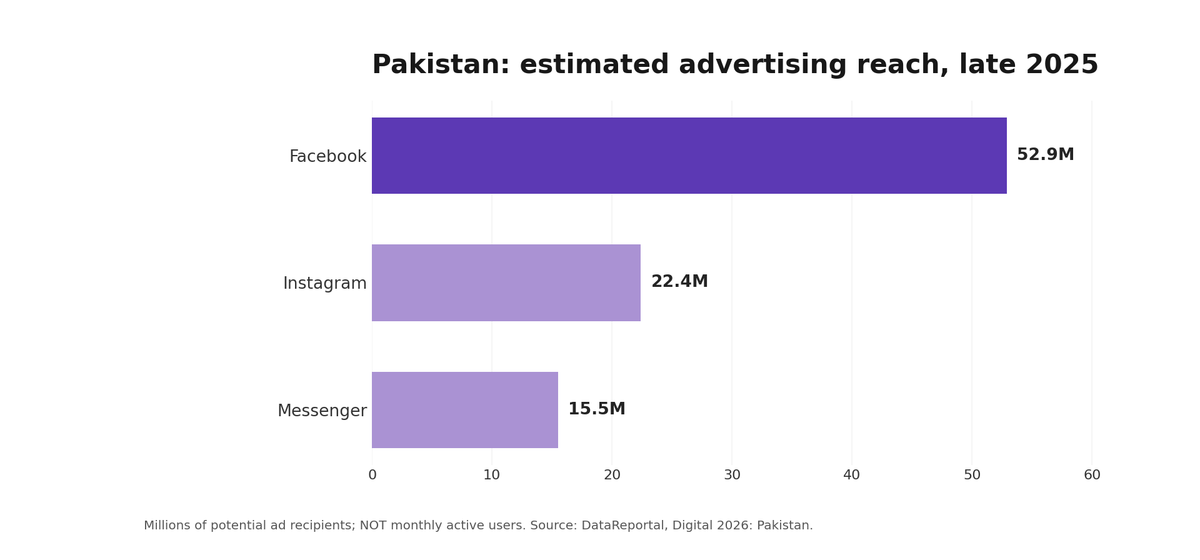
The size of Pakistan's digital audience makes cross-channel coordination relevant. DataReportal's Digital 2026 Pakistan report, using late-2025 figures, estimated 117 million internet users and 79.9 million social-media user identities. Meta advertising tools indicated potential reach of 52.9 million on Facebook, 22.4 million on Instagram and 15.5 million on Messenger. These are advertising-reach estimates, not unique active customer counts, and they cannot be added to calculate a combined audience. DataReportal does not provide a directly comparable WhatsApp figure in this set.
The value is not simply collecting messages. A useful workspace preserves the channel, timestamp, conversation owner, customer request, handoff status and relevant authorized business information so an enquiry can be resolved rather than lost.
Four channels, four different jobs
- WhatsApp: existing-customer questions, order-status requests and opt-in follow-ups. Business-initiated messages must comply with WhatsApp templates, consent and pricing rules.
- Instagram: discovery, product questions and direct messages from content or advertising. Access through the Instagram API depends on professional accounts, approved permissions and supported message types.
- Facebook Messenger: Page messages and customer support, subject to Meta's app permissions and messaging policies.
- Website chat: questions from people actively browsing your products, services or support pages. It can ask for details before passing a case to staff.
One interface should not erase those distinctions. For example, an Instagram DM cannot simply be treated as permission to send the same customer promotional WhatsApp messages.
How an incoming message should move through the system
1. Receive and identify the channel
An authorized integration receives the message or event. It records the originating channel and channel-specific conversation identifier. If required permissions or a connector are missing, that channel must not be advertised as connected.
2. Understand the customer request
The system classifies the request: product enquiry, order update, complaint, refund, appointment, sales opportunity or something else. An AI assistant may consult an approved knowledge base, but it should not invent inventory, prices, refund decisions or policy exceptions.
3. Answer, request more details or hand off
A straightforward FAQ can receive an immediate response. An order-specific request may need an authenticated lookup. A sensitive complaint, high-value negotiation, unsupported action or repeated failure should go to a human with the conversation context preserved.
4. Record the result
The system should record whether the request was answered, transferred, left unresolved, or completed through a connected business application. Message volume alone is not a measure of successful service.
What a unified inbox should—and should not—merge
A customer may use a different display name or telephone number on each platform. Cross-channel identity matching should use a reliable, consent-aware identifier or explicit confirmation. Do not merge profiles simply because names resemble one another. Access to payment, order and personal details should be restricted to the appropriate staff and workflow.
Likewise, a unified inbox does not override platform restrictions. A message outside WhatsApp's 24-hour customer-service window generally needs an approved template, and Instagram messaging APIs apply their own initiation and permissions rules.
A practical team setup
- Sales queue: product recommendations, pricing questions and purchase-intent enquiries.
- Customer service queue: order status, delivery problems, returns and account questions.
- Escalation queue: disputes, policy exceptions, identity checks and cases the AI cannot resolve confidently.
- Supervisor view: open cases, ageing conversations, handoff quality and unresolved customer issues.
For a small team, start with one shared inbox and clear ownership rules. Expand automation only after the routing, connected information and escalation path work consistently.
Metrics worth measuring
Track first response time, time to resolution, proportion resolved without human intervention, repeat-contact rate, handoff completion, customer satisfaction and cost per successfully resolved enquiry. Review these by channel rather than combining them into an unexplained average. As a simple example, first response time is the interval between the customer's first message and the first meaningful answer—not the time until an automated acknowledgement.
How Callvio fits
Different operations need different workflows even when channels share an inbox: event organisers must handle attendee versus vendor enquiries; universities must keep public admissions FAQs separate from private applicant records. Route each enquiry to the correct owner rather than applying one generic answer flow.
Callvio is built around AI-assisted business communication across voice and digital channels, including WhatsApp, Instagram, Facebook and website chat. Its practical value depends on which channel permissions are live, what workspace knowledge has been configured, which systems are integrated, and how human escalation is set up. Businesses should validate these details in a demonstration using real sample enquiries before committing to a rollout.
For a closer look at channel requirements, compare WhatsApp Business App versus API in Pakistan. For a retail use case across channels, see conversational commerce for Pakistani retailers.
A unified inbox still needs one accountable ticket owner
Test a customer who asks about an order on Instagram, sends a WhatsApp follow-up and then calls. Without verified identity matching, the system should not merge unrelated customer records. Once context is correctly matched, the customer should receive one status answer and the human team should see who owns the next action. Measure duplicate tickets and unresolved transfers, not only message volume.
The underlying customer data requirements are covered in AI CRM/ERP integrations; measure the outcome with customer-service performance KPIs.
How should a team manage WhatsApp and Instagram messages without duplicate replies?
Assign each enquiry a channel, conversation identifier, owner and status. An AI-assisted inbox can answer eligible routine requests or capture information, while an unresolved conversation is assigned to the appropriate staff member. When a human takes over, the system should prevent conflicting automated responses until the agreed handoff policy permits automation again.
Test this across channels with a sample product question, an order-specific request and a customer asking for a person. Confirm which incoming message types are supported on each connected account, whether outbound replies are allowed at that moment and whether ownership changes are visible to the team. A shared inbox is not proof that every social feature or customer identity can be merged.
Related guide: safe AI-to-human handoff rules
Frequently asked questions
Can one AI reply across all four channels?
A platform can share knowledge and routing logic across supported, connected channels. It still needs the correct permissions and channel-specific messaging behavior for each integration.
Does a shared inbox automatically combine customer identities?
No. A reliable customer record requires a verified matching process; otherwise, conversations should remain separate.
Should every enquiry be automated?
No. Automation is suitable for clearly bounded information requests and authorized actions. Complex or sensitive cases need a clear human handoff.
Next step
Map one week of enquiries by channel, classify the 10 most frequent questions and identify which requests need live data. Use that audit to design a shared inbox with measurable routing and escalation rules.
Sources
Meta Instagram API documentation — messaging capabilities and permission requirements
WhatsApp Business Messaging Policy — consent, templates and customer-service window
Meta WhatsApp Cloud API documentation — webhooks and message events
DataReportal — Digital 2026: Pakistan (late-2025 audience estimates)